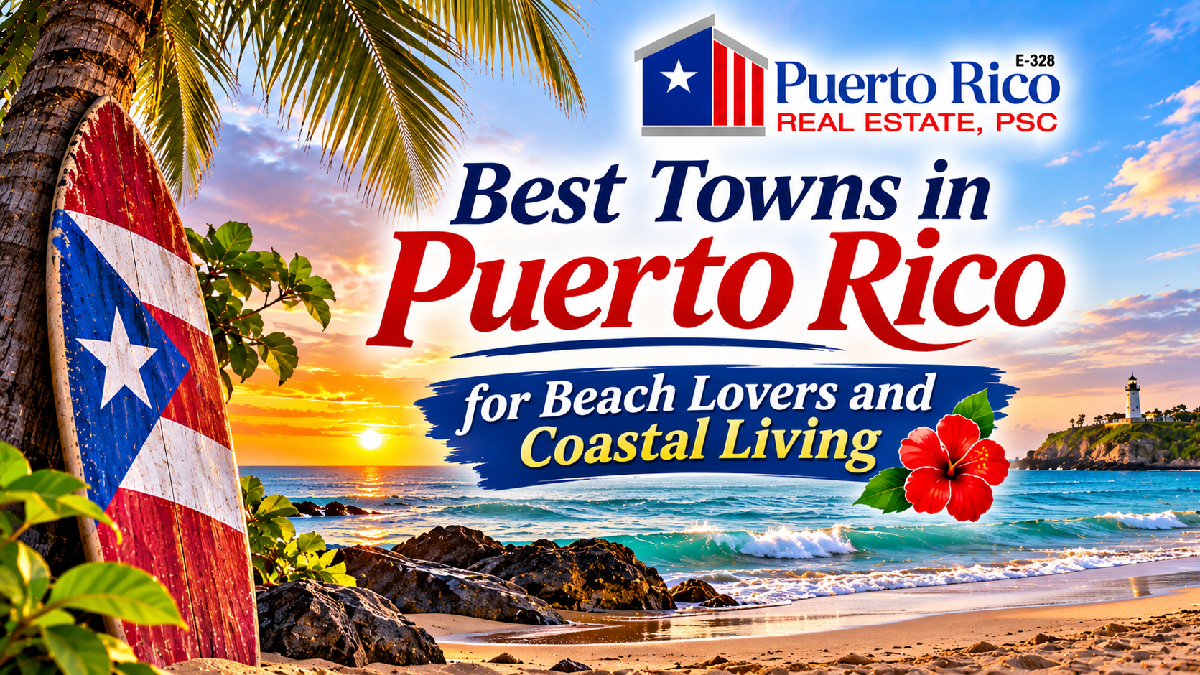
Imagine waking up on a Saturday morning in Puerto Rico.
The sun is already shining.
A gentle breeze moves through the palm trees.
You make a cup of coffee, step outside, and begin thinking about which beach you might visit that afternoon.
Maybe you'll spend the morning walking along the sand.
Perhaps you'll meet friends for lunch at a restaurant overlooking the ocean.
Or maybe you'll simply sit somewhere peaceful and listen to the waves.
For many people, this is the lifestyle they imagine when they think about living in Puerto Rico.
And honestly, it's easy to understand why.
Our island offers beautiful coastlines, tropical scenery, and communities where the ocean plays an important role in everyday life.
But here's something many people don't realize until they begin exploring Puerto Rico more closely:
Not every beach town offers the same lifestyle.
Some communities are known for surfing and outdoor adventure.
Others offer quiet residential neighborhoods.
Some attract visitors looking for restaurants, nightlife, and vacation activities.
And others appeal to people who prefer a slower pace, access to boating, or proximity to major employment centers.
Choosing where to live along Puerto Rico's coast requires more than finding a beautiful beach.
It means understanding the community, the available properties, the infrastructure, and your personal priorities.
At Puerto Rico Real Estate, PSC, we believe the best real estate decisions begin with understanding how people actually want to live.
And for homeowners considering selling, understanding what attracts buyers to coastal communities can help create a more effective marketing strategy.
Let's explore some of Puerto Rico's most appealing coastal towns and what makes each one special.
<text>Rincón is one of Puerto Rico's most recognizable beach destinations.</text>
Located on the island's western coast, this town is especially famous for its surfing culture, beautiful sunsets, and laid-back atmosphere.
Beaches such as Domes, Maria's, and Sandy Beach attract surfers and visitors interested in ocean activities.
The town also offers restaurants, cafés, small businesses, and a community shaped partly by its popularity among visitors and seasonal residents.
For some buyers, Rincón represents an opportunity to enjoy a coastal lifestyle centered on outdoor recreation.
But living here involves practical considerations.
Certain areas can experience heavier traffic during busy tourism periods.
Road access, parking, and neighborhood characteristics vary.
And properties located close to the shoreline may require additional attention to maintenance and environmental conditions.
For sellers, location-specific details matter.
A home with convenient beach access may appeal to a different audience than a hillside property with ocean views.
Rather than assuming every buyer wants the same thing, sellers should highlight the property's actual features and accessibility.
Rincón is a wonderful example of why coastal living is about much more than simply being near the water.
It's about the experience of the community itself.
Aguadilla offers an appealing combination of coastal recreation and practical amenities.
Located on Puerto Rico's northwestern coast, the municipality is known for beaches such as Crash Boat and the coastline around Punta Borinquen.
These areas attract beachgoers, surfers, snorkelers, and people who enjoy spending time outdoors.
Aguadilla also benefits from the presence of Rafael Hernández Airport, which provides commercial air service, although available routes and schedules can change.
For residents, the municipality offers shopping, restaurants, schools, medical services, and established neighborhoods.
That combination can make Aguadilla attractive to people who want beach access without feeling disconnected from everyday necessities.
Different neighborhoods offer different experiences.
A property near the former Ramey Air Force Base area may have characteristics unlike those of a residence closer to downtown Aguadilla.
Some buyers may prioritize yard space and residential streets.
Others may prefer proximity to beaches or commercial services.
For homeowners selling in Aguadilla, an accurate description of the location can help prospective buyers understand the property's advantages.
It's also important to be realistic about travel times and accessibility.
A home described as being near the beach should have that claim supported by its actual location.
Aguadilla's variety is one of its strengths.
It offers several ways to enjoy coastal living without requiring everyone to adopt the same lifestyle.
There's something particularly beautiful about Isabela.
Its coastline features beaches, dramatic rock formations, green landscapes, and scenic views that create a memorable setting.
Jobos Beach is among the municipality's best-known coastal destinations.
Other areas, including Montones and the coastline near Playa Middles, attract people interested in swimming where conditions permit, surfing, sightseeing, and enjoying nature.
Isabela also includes residential communities, rural areas, and neighborhoods farther from the shore.
For buyers, this variety can create interesting options.
Some may want a home close to restaurants and popular beach areas.
Others may prefer more space, quieter surroundings, or a property outside the busiest visitor corridors.
But coastal beauty should never replace practical due diligence.
Buyers should evaluate road access, drainage, maintenance requirements, utilities, and applicable land-use rules.
If a property is being considered for short-term rental activity, the buyer should investigate zoning, registration, permitting, community restrictions, and other applicable requirements rather than assuming that vacation rentals are automatically permitted.
For sellers, Isabela's natural appeal can be an important part of the property's story.
But the most effective marketing still begins with the residence itself.
Its condition.
Its location.
Its layout.
And the lifestyle it can realistically support.
Dorado has developed a strong reputation as a coastal municipality offering a variety of residential environments.
Located west of San Juan, it includes established neighborhoods, coastal areas, and planned residential developments.
Some communities feature amenities such as recreational facilities, controlled access, or proximity to golf courses.
However, amenities and access rights vary by property and development.
Buyers should never assume that purchasing a home in a particular area automatically provides access to nearby private facilities.
For people who work or maintain connections in the San Juan metropolitan region, Dorado may be worth exploring.
But commuting conditions can vary significantly depending on traffic, the specific neighborhood, and the destination.
Dorado also includes properties across different price ranges and styles.
Not every residence is a luxury property.
And not every neighborhood offers the same level of access to the coast.
For sellers, the key is to identify what genuinely distinguishes the property.
Perhaps it's a functional floor plan.
A well-maintained outdoor area.
Convenient access to local services.
Or specific community amenities that are included and can be verified.
Accurate, detailed marketing can help buyers compare available options more effectively.
Cabo Rojo is one of Puerto Rico's most beloved destinations for people who appreciate beaches and outdoor recreation.
Located in the island's southwest, it is known for its distinctive coastal landscapes.
Playa Buyé, Boquerón, and Combate are among the municipality's popular beach areas.
The Cabo Rojo National Wildlife Refuge and the lighthouse area near Los Morrillos also attract visitors interested in nature and scenic views.
The municipality includes a range of communities, from active visitor destinations to quieter residential neighborhoods.
For buyers, that diversity is important.
A property near Boquerón may offer a different daily experience from a home farther inland.
Some neighborhoods experience seasonal visitor activity.
Others may feel more residential throughout the year.
People considering a move should visit the area at different times when possible.
Observe traffic patterns.
Explore nearby services.
And understand the property's accessibility during busy weekends or holidays.
For sellers, Cabo Rojo's reputation can help introduce the area to prospective buyers.
But the marketing should focus on the property's specific characteristics rather than relying entirely on the municipality's popularity.
A well-presented residence with clear information gives buyers a stronger foundation for making decisions.
Not everyone who dreams of living near the ocean wants a traditional sandy beach lifestyle.
Some people are drawn to boating, waterfront scenery, and coastal communities with a distinctive character.
That's where La Parguera, located in the municipality of Lajas, becomes especially interesting.
Known for its coastal environment, mangrove areas, boating activities, and bioluminescent bay, La Parguera offers a different relationship with the water.
Restaurants, waterfront activities, and visitor services contribute to the area's appeal.
But potential residents should understand the environmental sensitivity of coastal and marine ecosystems.
Water access, boat facilities, and permitted activities may be subject to specific rules.
Property buyers should also evaluate flooding exposure, maintenance needs, and applicable restrictions.
A waterfront location doesn't automatically mean that a property includes a dock or that additional marine structures can be installed.
Those details require verification.
For sellers, La Parguera's character can be an important marketing consideration.
But clear documentation and accurate property descriptions are essential.
The best approach is to communicate what the property actually offers, rather than making assumptions based on its proximity to the water.
Fajardo is well known for its connection to boating and marine recreation.
Located on Puerto Rico's eastern coast, it offers access to marinas, coastal communities, and excursions to nearby islands and cays.
The area around Seven Seas Beach is a popular destination for beachgoers.
Fajardo also provides access to shopping, restaurants, and other services.
For some buyers, its appeal comes from the combination of residential living and outdoor activities.
People interested in boating may appreciate proximity to marina facilities.
Others may simply want to enjoy the coast while maintaining access to everyday conveniences.
However, marina services and boat slips are not automatically included with nearby residential properties.
Availability, fees, ownership arrangements, and access rules should be verified independently.
Similarly, coastal properties can face exposure to salt air, storms, and other environmental conditions.
Buyers should investigate insurance availability and costs, property condition, and any applicable flood risks.
For sellers, Fajardo's coastal reputation can attract attention.
But providing accurate information about the home and its surroundings remains the most important starting point.
Luquillo is another popular coastal municipality on Puerto Rico's eastern side.
Its beaches and famous kiosks have made it a favorite destination for both residents and visitors.
Balneario de Luquillo, also known as Balneario La Monserrate, is one of the area's most recognizable beach locations.
The municipality also offers access to nearby natural attractions, including El Yunque National Forest in the neighboring mountain region.
For people who enjoy combining beach days with outdoor exploration, Luquillo can be appealing.
But as with other popular destinations, the daily experience varies by neighborhood.
Some areas may see more visitor activity.
Others offer a more traditional residential environment.
Prospective buyers should evaluate the specific property and its surroundings.
Consider drainage, road access, utilities, and proximity to services.
And visit the neighborhood at different times if possible.
For sellers, the area's natural attractions may be relevant to marketing.
But they should complement an accurate description of the residence rather than overshadow its practical features.
Humacao, located on Puerto Rico's eastern coast, offers a range of residential communities and coastal environments.
One of its best-known developments is Palmas del Mar.
This large planned community includes residential properties and a variety of recreational and commercial facilities.
Depending on the specific property and arrangements, residents may have access to certain amenities.
But buyers should carefully review association rules, membership requirements, fees, and access rights.
Not every amenity is automatically included with every purchase.
Humacao also offers communities outside Palmas del Mar, each with different characteristics.
For buyers, the municipality provides opportunities to explore several styles of residential living.
Some may prioritize proximity to the coast.
Others may focus on schools, services, neighborhood design, or property size.
For sellers, accurate information about community fees and property restrictions is especially important.
Buyers evaluating a planned development may want to understand ongoing ownership costs before making a decision.
Clear communication can help reduce misunderstandings and support a more organized transaction.
For some beach lovers, the ultimate dream involves living on one of Puerto Rico's smaller island municipalities.
Vieques and Culebra are known for extraordinary natural beauty and distinctive coastal environments.
Culebra's Flamenco Beach is internationally recognized for its scenery.
Vieques offers beaches, natural landscapes, and its famous bioluminescent bay.
Both islands attract people interested in a quieter environment and close contact with nature.
But living on a smaller island involves considerations that differ from those on Puerto Rico's main island.
Transportation is particularly important.
Residents may depend on ferry service or flights, and schedules or availability can change.
Access to certain goods, specialized services, and medical care may require additional planning.
Construction, repairs, and property maintenance may also involve logistical challenges.
For buyers, understanding these realities is essential.
A beautiful vacation experience doesn't automatically translate into the right long-term living arrangement.
For sellers, accurate information about the property's condition, access, utilities, and ongoing costs can help prospective buyers evaluate whether island living fits their needs.
Puerto Rico's coastline is beautiful, but buying near the ocean requires thoughtful evaluation.
One of the first considerations is the property's exact location.
Being near the coast doesn't necessarily mean having direct beach access.
Similarly, an ocean view from a particular angle may not be visible from every room or outdoor area.
Buyers should verify the property's actual features.
Another important factor is environmental exposure.
Coastal homes may experience increased wear from salt air, humidity, wind, and storms.
Maintenance requirements can vary based on construction, materials, and exposure.
Flooding and coastal hazards are also important considerations.
Buyers should review available flood hazard information and seek appropriate professional guidance.
Insurance availability, coverage, exclusions, and premiums should be investigated before purchasing.
Financing and property documentation also matter.
A buyer should understand the property's legal status, permitted uses, and any relevant restrictions.
The goal isn't to discourage coastal living.
It's to make sure the decision is based on realistic expectations.
A beautiful view is wonderful.
But long-term satisfaction also depends on the property's suitability for everyday life.
When people first imagine living near the ocean, they often picture the exciting parts.
Sunsets.
Warm breezes.
Weekend gatherings.
And beautiful scenery.
But everyday life includes practical routines.
Grocery shopping.
Medical appointments.
School schedules.
Work commitments.
Home maintenance.
And transportation.
That's why the best coastal town for one person may not be the right choice for another.
A family with school-age children may have different priorities from a retiree.
Someone who works remotely may evaluate internet reliability and backup power differently from a person who commutes daily.
And a buyer who enjoys active tourist areas may prefer a different environment from someone seeking peace and quiet.
Before choosing a town, spend time exploring the community.
Visit local businesses.
Observe traffic.
Learn about services.
And think about how the area would fit your regular routine.
Our article How to Attract Relocating Buyers to Your Puerto Rico Home explains some of the priorities that matter to people planning a move to the island.
For sellers, understanding these practical needs can help create property descriptions that are useful rather than overly promotional.
If you own a home in one of Puerto Rico's coastal communities, you may already understand what makes the area special.
Perhaps you've enjoyed years of beautiful sunsets.
Maybe your family loves spending weekends at nearby beaches.
Or perhaps you've appreciated the convenience of living close to local restaurants and outdoor activities.
Those experiences are meaningful.
But selling your property requires translating its features into clear information that prospective buyers can evaluate.
Start with the basics.
The home's condition.
Its layout.
The size of the property.
Its location.
And any features that distinguish it from comparable residences.
Professional photography can help communicate the home's appearance.
Accurate descriptions can explain its practical advantages.
And an appropriate pricing strategy can help position it within the current market.
Our Guide to Preparing Your Home for Sale in Puerto Rico offers practical advice for preparing a residence before listing it.
Sellers should also understand the costs associated with a transaction.
Our article How Much Does It Cost to Sell a House in Puerto Rico? explains several expenses that may affect the amount a homeowner receives.
A successful marketing strategy doesn't rely on scenery alone.
It combines accurate information, appropriate presentation, and realistic expectations.
Selling a coastal property can involve considerations that differ from selling a home farther inland.
Buyers may ask about flood exposure, insurance, maintenance, access, community rules, or permitted uses.
Some may be relocating to Puerto Rico.
Others may be purchasing a primary residence, second home, or investment property.
Different buyers have different priorities.
At Puerto Rico Real Estate, PSC, we believe sellers benefit from an approach that considers the property's individual characteristics and the needs of the market.
That begins with understanding the home.
Its condition.
Its location.
Its documentation.
And how it compares with other available properties.
It also involves discussing a realistic pricing strategy and preparing marketing materials that communicate the property's features accurately.
Clear communication is important throughout the process.
No brokerage can guarantee a specific selling price or timeline.
But thoughtful preparation and professional marketing can help homeowners approach the sale with greater confidence.
Our article How Long Does It Take to Sell a House in Puerto Rico? explores factors that can influence the time required to complete a sale.
Whether your property is in Aguadilla, Isabela, Rincón, Dorado, Cabo Rojo, or another coastal community, the goal is to develop an approach appropriate for the residence and your circumstances.
There's no single answer to the question of which beach town in Puerto Rico is best.
Rincón may appeal to someone who loves surfing and sunsets.
Aguadilla may attract people seeking coastal recreation alongside everyday services.
Isabela offers beautiful natural landscapes and varied residential environments.
Dorado provides coastal communities with access to the metropolitan region.
Cabo Rojo is known for its beaches and southwestern character.
Fajardo attracts people interested in boating and eastern coastal activities.
Luquillo combines beaches with access to nearby natural attractions.
Humacao offers a range of residential settings, including planned-community options.
And Vieques and Culebra provide distinctive island lifestyles that require additional practical planning.
Each location has something different to offer.
The important thing is finding a community that matches your needs, expectations, and long-term plans.
For buyers, that means looking beyond beautiful photographs.
For sellers, it means presenting the property honestly and highlighting the features that genuinely distinguish it.
And for everyone, it means recognizing that Puerto Rico's coastal communities are more than vacation destinations.
They're places where people live, work, raise families, build friendships, and create memories.
Puerto Rico's coastline is one of our island's greatest treasures.
From the surfing beaches of the west to the boating communities of the east, our coastal towns offer an incredible variety of experiences.
But what makes these communities special isn't simply the sand or the ocean.
It's the people.
The traditions.
The local businesses.
The neighborhoods.
And the everyday moments that turn a beautiful location into a meaningful place to live.
For some people, the perfect coastal home is a small residence close to a favorite beach.
For others, it's a property with a spacious patio where family and friends can gather.
And for some, it's a home in a community that offers convenient access to the services they need.
There's no universal definition of the perfect beach lifestyle.
There's only the lifestyle that fits you.
At Puerto Rico Real Estate, PSC, we're proud to help homeowners explore their real estate options throughout Puerto Rico.
If you're considering selling a coastal property, understanding what makes your home and community special is an important first step.
Because the best place to live isn't necessarily the most famous beach town. It's the place where your life, your priorities, and your sense of home come together.
Whether you own a home near the beach, a residence with ocean views, or a property in one of Puerto Rico's coastal communities, Puerto Rico Real Estate, PSC can help you explore your selling options.
Let's discuss your property's characteristics, your goals, and a marketing strategy suited to your circumstances.
Puerto Rico Real Estate, PSC
Puerto Rico Real Estate License E-328
Phone: 787-244-6364
Email: [email protected]
Website: https://www.thepuertoricorealestate.com
Contact our team to discuss your property and the next steps toward your real estate goals.
1. How to Attract Relocating Buyers to Your Puerto Rico Home
https://thepuertoricorealestate.com/article/how-to-attract-relocating-buyers-to-puerto-rico-homes
2. Guide to Preparing Your Home for Sale in Puerto Rico
https://thepuertoricorealestate.com/article/prepare-home-for-sale-puerto-rico-guide
3. How Much Does It Cost to Sell a House in Puerto Rico?
https://thepuertoricorealestate.com/article/cost-to-sell-house-puerto-rico-fees-guide-2026
4. How Long Does It Take to Sell a House in Puerto Rico?
https://thepuertoricorealestate.com/article/how-long-sell-house-puerto-rico-timeline-guide1
#PuertoRicoBeachTowns #CoastalLivingPuertoRico #PuertoRicoRealEstate #RinconPuertoRico #AguadillaPuertoRico #IsabelaPuertoRico #DoradoPuertoRico #CaboRojoPuertoRico #FajardoPuertoRico #LivingInPuertoRico #SellYourHomePuertoRico #PuertoRicoRealEstatePSC
Your satisfaction guides our every step. Thanks for choosing PRRE.